
Home › Guides › Markets & the economy
How interest rates affect stocks, in 4 simple links
When the Fed changes rates, almost every chart reacts. Follow 4 simple links of cause and effect, and the headlines start to make sense.
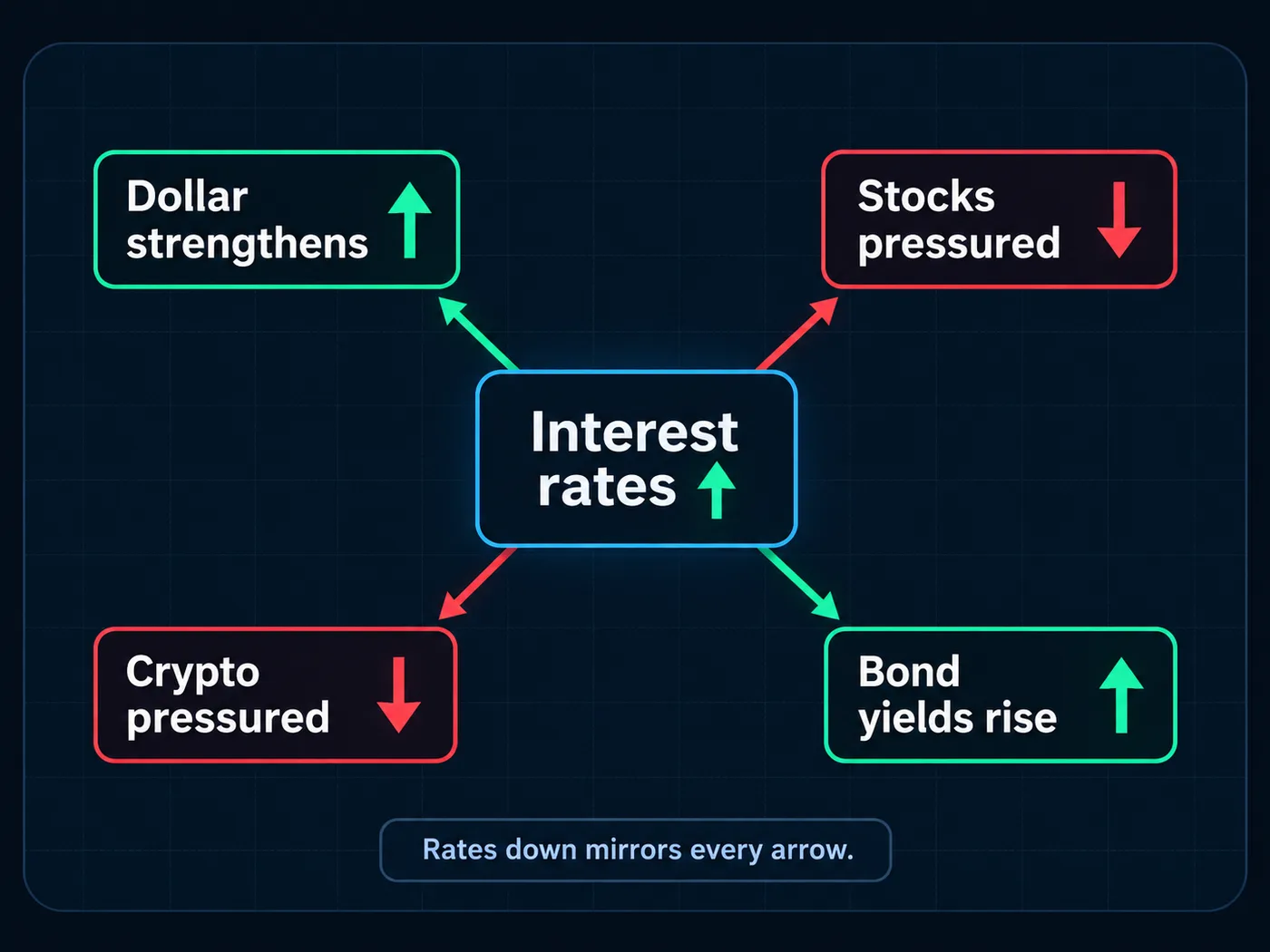
What "interest rates" means here
An interest rate is the price of borrowing money. When you hear "the Fed raised rates", it usually means the US central bank raised its main short-term rate, called the federal funds rate.
That one rate affects many others: car loans, mortgages, credit cards, business loans and the yield on US government bonds. When it moves, the ripple reaches stocks in a few different ways.
The Fed's rate decisions are made at its FOMC meetings, eight times a year. More on those in CPI and FOMC days.
Link 1: borrowing gets more expensive
When rates go up, borrowing costs more — for people and for companies.
- People may spend less on big items like houses and cars.
- Companies pay more interest on their loans, which leaves less for growth, hiring or paying shareholders.
- New projects that made sense with cheap money may get put on hold.
Less spending and higher costs can mean lower expected earnings. Since stock prices are tied to what investors expect companies to earn, that can weigh on prices. When rates go down, the same chain often runs in reverse.
Link 2: future earnings are worth less today
This one sounds tricky but it's simple. Imagine two choices:
- $100 in a safe savings account that pays 1% a year
- $100 in a safe savings account that pays 5% a year
At 5%, waiting is more rewarding. Money today is worth more, because it can earn more safely. Money that arrives years from now is worth less by comparison.
Stocks work the same way. A stock's price is partly a guess about all the money a company will earn in the future. When safe rates go up, those future earnings look less valuable today — so investors may pay less for them.
In one line: higher rates make safe options pay more, so investors want more from riskier ones like stocks. That can pull stock prices down, even if nothing about the company has changed.
Link 3: growth stocks often feel it most
A growth stock is a company whose big earnings are expected far in the future — many tech companies are examples. A value stock is usually a steadier company earning money now.
Because so much of a growth company's value is in the future, Link 2 hits it harder. When rates rise, growth stocks often come under more pressure than steady earners. When rates fall, they often get more of a lift.
Notice the word often. Plenty of times, other news matters more — like a company's own earnings report.
Link 4: a stronger dollar
Higher US rates can attract money from around the world, because US savings and bonds now pay more. To buy them, investors need dollars, which can push the dollar up against other currencies.
A stronger dollar can matter for stocks too:
- US companies that sell a lot overseas get paid in other currencies, which turn into fewer dollars.
- US goods get pricier for buyers abroad.
That's why forex traders watch rate decisions as closely as stock traders do. See forex vs stocks for how the two markets differ.
It's a tendency, not a rule
Here's the honest part: none of these links is guaranteed. Stocks have risen while rates went up, and fallen while rates went down. A few reasons why:
- Markets look ahead. Prices often move on what traders expect the Fed to do. If a rate rise was fully expected, the actual decision may barely move anything.
- Why rates change matters. Rates rising because the economy is strong can feel very different from rates rising to fight high inflation.
- Other news competes. Earnings, jobs data and world events can all outweigh rates on a given day.
So treat this as background knowledge, not a trading signal. It helps you understand why the market is moving, not where it will go next.
How a chart trader can use this
You don't need to predict the Fed. You need to know when rate news is coming, and to respect it.
- Know the dates. Check the economic calendar each week for Fed meetings, CPI and the jobs report.
- Step aside around the big ones. Many traders take no new trades 15–30 minutes before and after.
- Let the chart confirm. After the news, wait for the chart to show a direction. For us, that means price breaking past the last place it turned around, with a candle body close — then trading with the trend, not against it.
Bigger picture first. Rate changes tend to shape trends over weeks and months. That's one more reason to check the daily chart before looking at a five-minute one.
Try it today
- Find the date of the next Fed meeting on the Federal Reserve's calendar.
- Pull up a daily chart of a big stock index and mark the last few Fed decision days.
- Note what price did in the days after each one. Did it follow the "tendency" — or not?
Questions
Do stocks go down when interest rates go up?
Often, but not always. Higher rates can raise company costs and make future earnings worth less today, which can pressure prices. But if a rise was expected, or the economy is strong, stocks can still go up.
Why do growth stocks fall when rates rise?
Much of a growth company's value is in earnings expected years from now. Higher rates make those future earnings worth less today, so growth stocks often feel rate changes more.
How do interest rates affect the dollar?
Higher US rates can draw money into US savings and bonds, which can push the dollar up. Lower rates can do the opposite. Like everything here, it's a tendency, not a rule.
Who sets interest rates in the US?
The Federal Reserve's Federal Open Market Committee (FOMC) sets the target for the federal funds rate. It meets eight times a year.
Want the next step? We'll walk you through it.
Four free lessons by email, one every few days — each with a 10-minute exercise on a real chart.
Send Me the Free Lessons 4 short emails · No spam · Unsubscribe anytimeOr see the whole method, step by step:
See What’s Inside the Course Try everything free first. Decide when you're ready. · Open the free chart tool (works in the TradingView phone app)One chart idea a day, in plain English. Follow along: