
What is tilt in trading?
In one line: Tilt is a state where frustration or excitement takes over, so trades start following feelings instead of the plan. The word comes from poker.
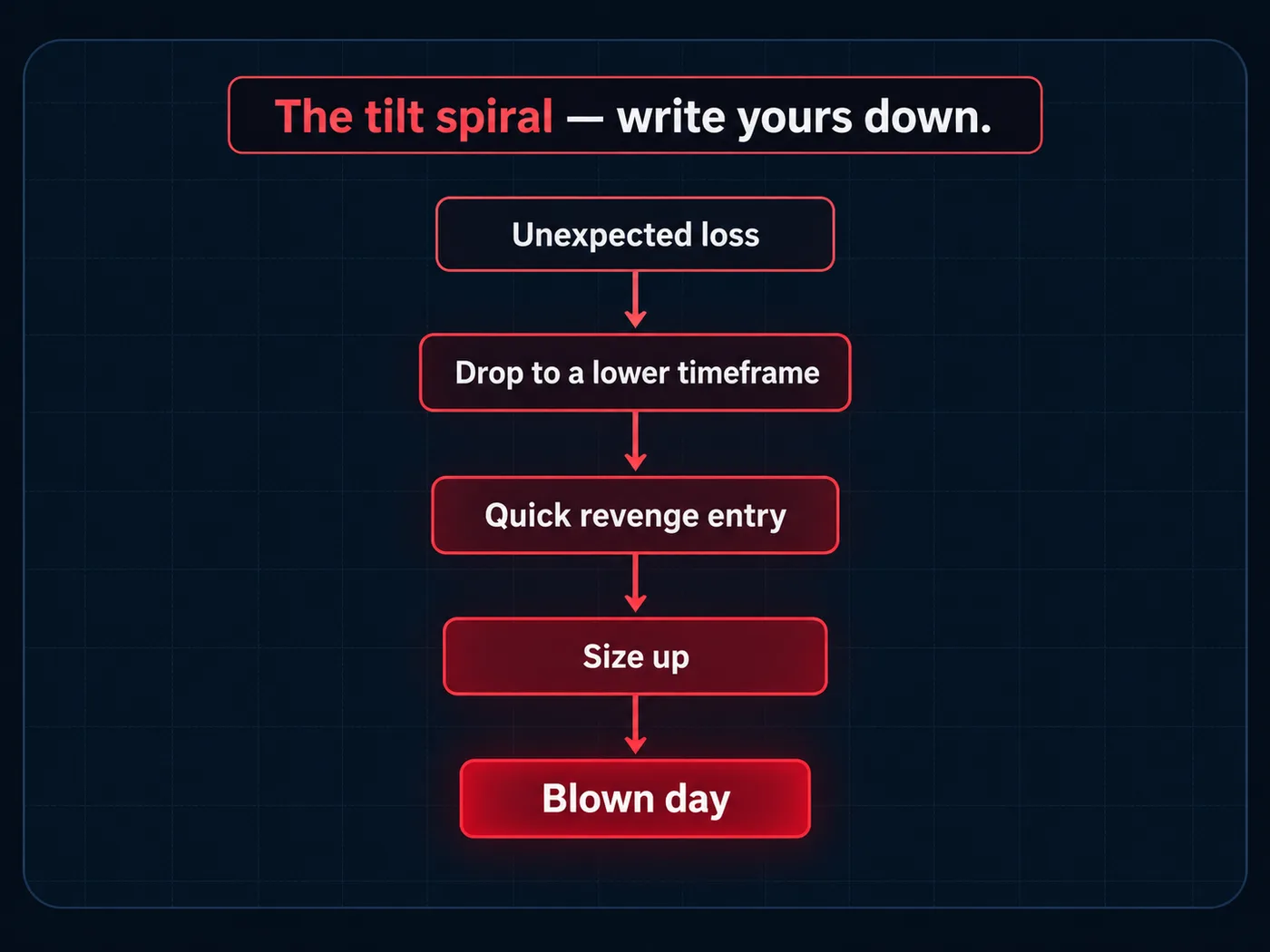
A simple example
It's 10:15 am. A trade hits its stop. That's normal; losses are part of any plan.
At 10:22 you take another trade, a bit early, "to get it back." It loses too.
At 10:40 you double the size on a trade that's only half a setup. Now you're watching every tick, jaw tight.
None of these choices was planned. Each one came from the last result. That chain is tilt.
The early signs
- Trading sooner after a loss than you normally would.
- Raising size to "make it back." See revenge trading.
- Skipping your checklist "just this once."
- Feeling you have to trade, or can't walk away.
- Tight chest, fast breathing, staring at the screen.
Why it matters
Tilt turns one normal loss into several bigger ones. A plan risking 1% a trade can lose 5% in an hour once tilt takes over, because the plan isn't being followed anymore.
The good news: tilt is predictable. It usually starts after a loss, a big win, or a missed move. That means you can set up rules before it happens.
How to stop it early
- Set a daily stop in advance. For example: 2 losses and you're done for the day. See daily loss limit.
- Name your state before each trade. Calm, bored, rushed, frustrated? Writing it down creates a pause.
- Step away for 15 minutes after any loss. Walk, water, no charts.
The rule has to be set while you're calm. Mid-tilt, every trade looks like a good idea.
A common mistake
Thinking tilt only comes from losses. A big win can cause it too. Feeling unbeatable leads to bigger size and looser rules just as quickly. More in trading psychology for beginners.
Questions
Where does the word tilt come from?
From poker, borrowed from pinball, where shaking the machine too hard showed "TILT" and ended your turn. A player "on tilt" plays emotionally instead of well.
How do I recover from tilt?
Stop trading for the day. Review the trades the next morning when calm, and note which rule slipped first.
Can experienced traders go on tilt?
Yes. That's why many of them use hard daily limits. Rules work best when they don't rely on feeling calm.
Want the next step? We'll walk you through it.
Four free lessons by email, one every few days — each with a 10-minute exercise on a real chart.
Send Me the Free Lessons 4 short emails · No spam · Unsubscribe anytimeOr see the whole method, step by step:
See What’s Inside the Course Try everything free first. Decide when you're ready. · Open the free chart tool (works in the TradingView phone app)One chart idea a day, in plain English. Follow along: