
What is a bracket order?
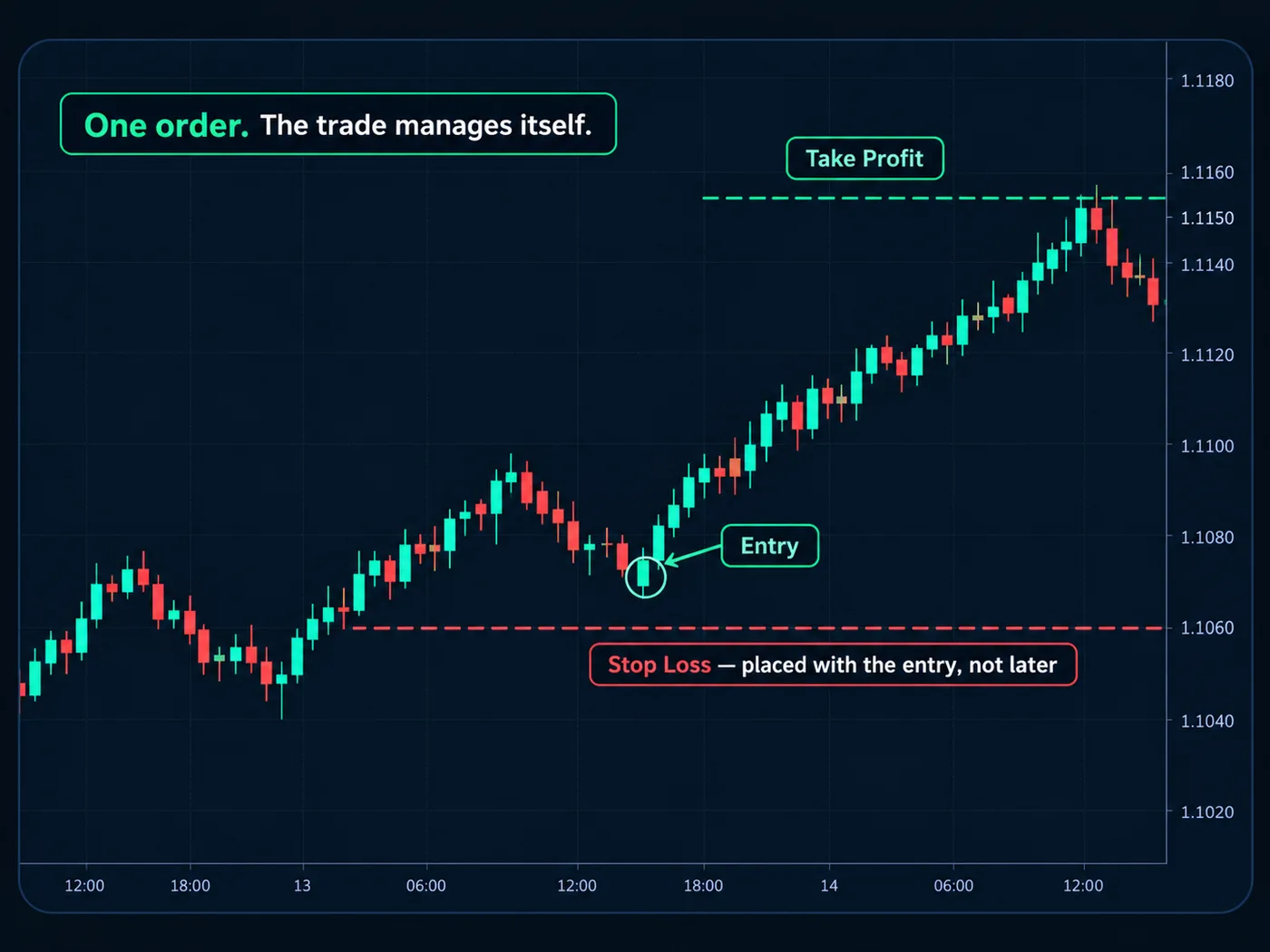
In one line: A bracket order is an entry order with a stop loss and a take profit attached, so both exits are set the moment the trade opens.
A simple example
You plan to buy a stock at $50.00. Your chart says the idea is wrong below $49.00. Your target is $52.00.
A bracket order sends all 3 at once:
- Entry: buy at $50.00
- Stop loss: sell at $49.00 (risk: $1 a share)
- Take profit: sell at $52.00 (reward: $2 a share)
That's 1 unit of risk to aim for 2. A math example, not a promise. The trade can still hit the stop.
The 2 exits wait in the background. When one fills, the other is cancelled. That link is an OCO order (one cancels the other).
Why it matters
A bracket order makes you decide everything before you're in. No "I'll set the stop in a minute." No moving the target while your heart races.
It also protects you if you step away, lose signal or your app freezes. The exits are already on the broker's side.
The stop should come from the chart, and your size from the stop. The position size calculator turns "$1 a share and 1% risk" into a share count. The risk-reward calculator checks the target math.
A common mistake
Setting the bracket, then dragging the stop further away. The whole point is that you decided while calm. Moving the stop wider raises your risk after the fact.
Another one: placing the stop at a round number that has nothing to do with the chart. Put it just past the last place price turned around. Our stop loss guide walks through it.
Questions
Does every broker offer bracket orders?
Many do, including most stock, futures and forex platforms, but names differ. Some call it "attached orders" or "OTOCO." Check your broker's order ticket.
Is a bracket order the same as an OCO order?
Not quite. A bracket has an entry plus 2 exits. An OCO is just 2 orders where filling one cancels the other. A bracket uses an OCO for its exits. See OCO vs bracket order.
Can my stop fill at a worse price than I set?
Yes. A stop becomes a market order when hit, so in a fast move or a gap it can fill worse. That's called Slippage.
Want the next step? We'll walk you through it.
Four free lessons by email, one every few days — each with a 10-minute exercise on a real chart.
Send Me the Free Lessons 4 short emails · No spam · Unsubscribe anytimeOr see the whole method, step by step:
See What’s Inside the Course Try everything free first. Decide when you're ready. · Open the free chart tool (works in the TradingView phone app)One chart idea a day, in plain English. Follow along: