
Risk-on and risk-off, explained
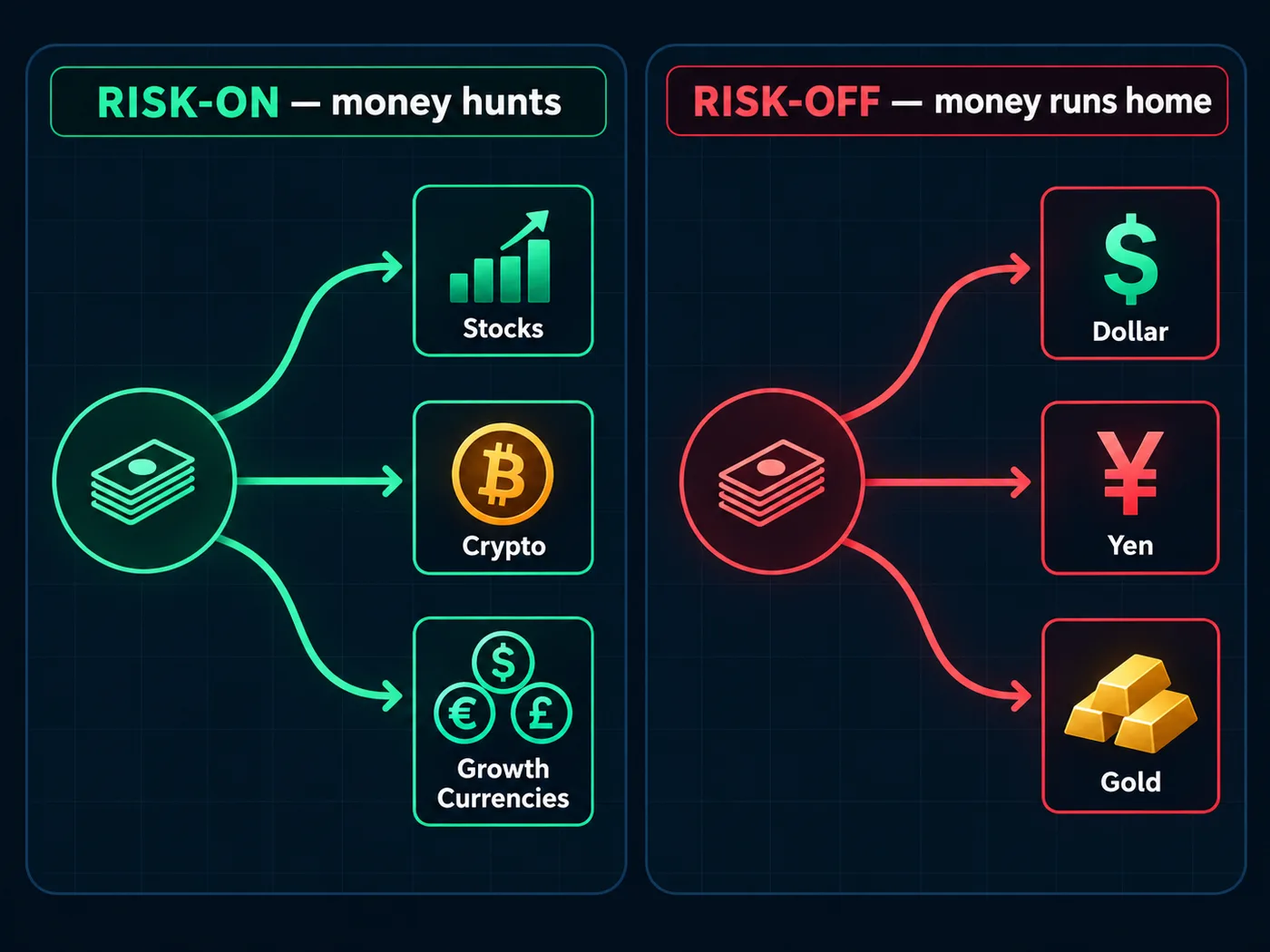
In one line: Risk-on is a market mood when investors buy riskier assets like stocks. Risk-off is when they sell them and move toward safer ones like bonds or the yen.
Who usually moves which way
| Risk-on (calm, confident) | Risk-off (worried) | |
|---|---|---|
| Stocks | Up | Down |
| Japanese yen, Swiss franc | Weaker | Stronger |
| Australian, NZ dollar | Stronger | Weaker |
| US Treasuries | Prices often fall | Prices often rise |
| Gold | Mixed | Often stronger |
| Crypto | Often up | Often down |
These are tendencies, not laws. Some days the pattern breaks.
A simple example
A surprise trade dispute hits the news. Within an hour:
- The S&P 500 drops 1.5%.
- AUD/JPY falls 120 Pips, because the Australian dollar weakens and the yen strengthens at the same time.
- Treasury yields slip as investors buy bonds.
That's a textbook risk-off move. A week later, if the dispute eases, the same markets often swing back: risk-on.
Why it matters
- Your trades can be the same bet. Long AUD/JPY, long stocks and long bitcoin can all fall together on a risk-off day. That's one big bet, not three. See Correlation.
- Bigger swings. Risk-off days often bring higher Volatility and wider spreads.
- Context. Knowing the mood helps explain moves that have nothing to do with the chart in front of you.
A common mistake
Trading the mood instead of the chart. A risk-off headline doesn't mean your stock must fall right now. Check the bigger chart first, then decide. And when several of your trades lean the same way, size them as one combined risk with the position size calculator.
Questions
What causes risk-off?
Anything that makes investors nervous: recession fears, wars, banking stress, surprise rate moves or a sharp stock drop.
Why is AUD/JPY called a risk barometer?
The Australian dollar tends to rise in good times and the yen in worried times. Their pair moves a lot with the overall mood.
Want the next step? We'll walk you through it.
Four free lessons by email, one every few days — each with a 10-minute exercise on a real chart.
Send Me the Free Lessons 4 short emails · No spam · Unsubscribe anytimeOr see the whole method, step by step:
See What’s Inside the Course Try everything free first. Decide when you're ready. · Open the free chart tool (works in the TradingView phone app)One chart idea a day, in plain English. Follow along: