
Paper trading vs live trading: when to make the switch
Paper trading is practice with pretend money in a real market. When you switch to live, the charts stay the same. Your feelings don't.
The short answer
Paper trading lets you place trades in a practice account. Prices are real; the money isn't. Live trading uses real money, so wins and losses are real too.
Paper trading builds the skill. Live trading tests whether you can follow it when something is at stake. Most traders need both, in that order.
Side by side
| Paper trading | Live trading | |
|---|---|---|
| Money at risk | None | Real, losses are possible |
| Cost | Free on most platforms | Fees, spreads and any losses |
| What it teaches | Reading charts, following steps, using the platform | Following your rules under pressure |
| Fills | Often perfect, no waiting in line | Real slippage and missed fills |
| Feelings | Mild | Much stronger, fear and excitement show up |
| Good for | Learning, testing a plan, building habits | Using a plan you've already practiced |
| Main trap | Taking huge sizes because it's not real | Sizing up too soon, or chasing losses |
Paper trading: build the skill first
Paper trading is where you learn the steps without paying for mistakes. You can test a plan, learn your platform's buttons and build a journal. On TradingView, bar replay lets you practice on past charts too. See TradingView bar replay.
The good parts:
- Mistakes are free. Every error is a lesson, not a bill.
- Lots of reps. You can practice dozens of setups a week.
- Tests the plan. You find out if your rules even make sense.
The hard parts:
- Too easy to be brave. Fake money makes it easy to skip the stop or size up.
- Fills are too kind. Practice accounts often fill you perfectly.
- Feelings are missing. Following rules is easy when nothing is at stake.
Make practice real. Use the account size you'd really start with. Risk 1% a trade. Log every trade in a journal, the losses too. Then the habits carry over.
Live trading: test it for real
Real money changes how a trade feels. A small red number can tempt you to move your stop or close a good trade too early. That's normal. It's also why the first live trades should be small.
The good parts:
- Real feedback on your fills, costs and habits.
- You learn how you react. That's the part practice can't show you.
The hard parts:
- Losses are real. Every trade can lose, so keep size small.
- Stress. Expect it, and plan for it with a daily loss limit.
- Old habits come back. A pre-trade checklist helps keep you on plan.
A simple path from practice to live
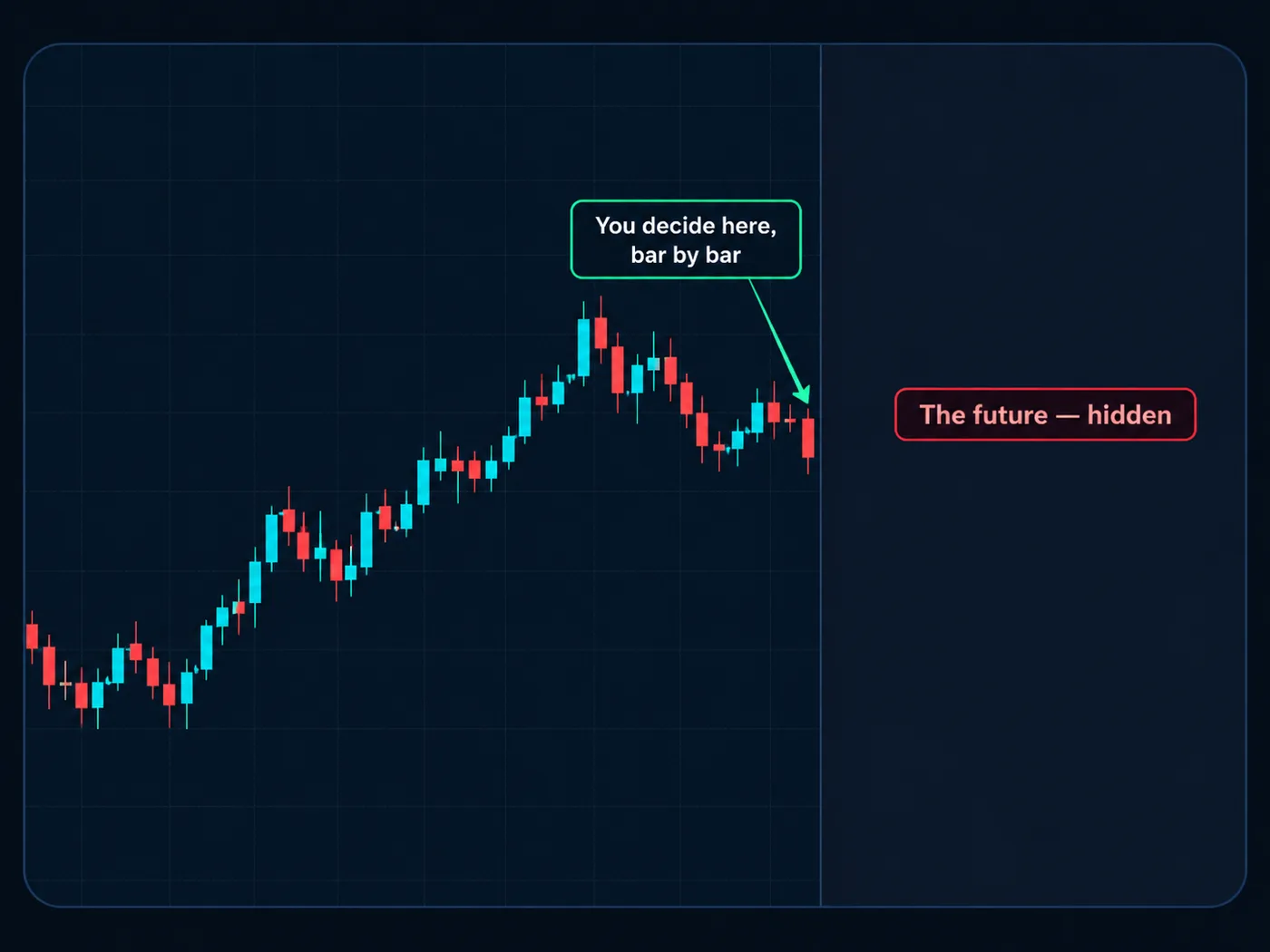
- Practice on past charts. Replay one candle at a time and never peek ahead. Log each trade.
- Paper trade in the live market. Same rules, same size, same journal. Aim for at least 20 to 30 logged trades.
- Review the journal. Did you follow your rules? Not "did you win", but "did you do what the plan said".
- Go live, small. Use the smallest size your market allows, and keep risk per trade low.
- Grow slowly. Only raise size after a long stretch of following your rules.
A free trading journal template makes steps 1 to 3 easy.
Which fits you?
- Still learning the basics? Stay in practice. There's no rush.
- Following your rules on paper, trade after trade? Small live trades may be the next step.
- Breaking rules on paper? Fix that first. It gets harder with real money, not easier.
Common mistakes
- Huge paper sizes. It builds habits you can't use live.
- Switching to live after a few good days. A short streak says little.
- Going big on the first live trade. Start small, every time.
- Dropping the journal once money is real. That's when it matters most. See how to keep a trading journal.
Questions
How long should I paper trade before going live?
There's no fixed time. A useful test is 20 to 30 logged practice trades where you followed your plan each time. Then start live with very small size.
Is paper trading realistic?
The prices are real, but fills are often too perfect and the feelings are missing. It's great for learning steps, less so for learning how you react under pressure.
Why do people trade differently with real money?
Real losses trigger stronger feelings, like fear of losing or the urge to win it back. Small sizes at first help keep those feelings manageable.
Can I paper trade on TradingView?
Yes. TradingView has a built-in paper trading account and a bar replay mode for practicing on past charts.
Want the next step? We'll walk you through it.
Four free lessons by email, one every few days — each with a 10-minute exercise on a real chart.
Send Me the Free Lessons 4 short emails · No spam · Unsubscribe anytimeOr see the whole method, step by step:
See What’s Inside the Course Try everything free first. Decide when you're ready. · Open the free chart tool (works in the TradingView phone app)One chart idea a day, in plain English. Follow along: